

Contract vs permanent recruitment
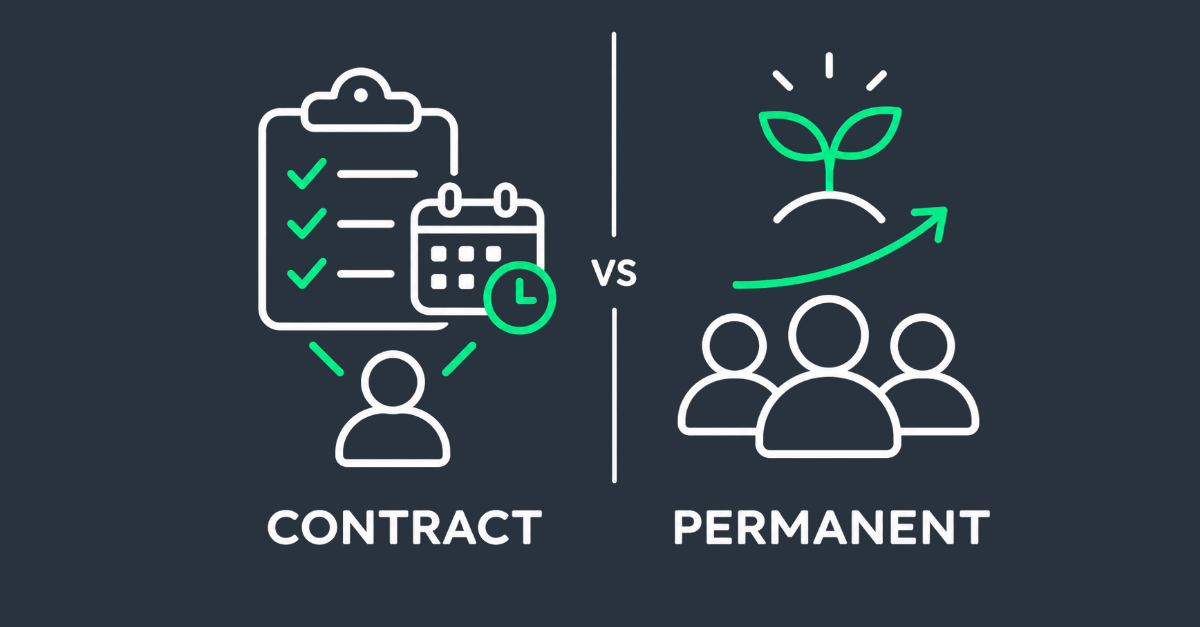
You need more support, but should you hire a contractor or a permanent employee? Start with the work you need doing, how long it will last and who will take responsibility afterwards.
This guide helps you compare contract vs permanent recruitment, ask the right questions and decide what suits your team. At Boost Talent, we help businesses recruit for both, with honest advice around your priorities.
Contract or permanent? Your quick checklist
- Choose contract support when the work has a defined endpoint, needs specialist experience or creates a temporary increase in workload.
- Consider a permanent hire when the responsibilities are ongoing, workloads have grown consistently or someone needs to take long-term ownership.
- Consider both when your permanent team needs additional skills or capacity to deliver a particular project.
- Compare the full cost over the period you need support, rather than comparing a day rate with an annual salary.
- Plan the start and handover. Every new person needs clear expectations, access to information and someone to answer questions.
A useful first question is: “Will we still need someone doing this work once the immediate project or pressure has passed?” Your answer will help guide the decision.
What is the difference?
Contract recruitment brings someone into your business for a defined project, period or requirement. That might be a developer supporting a launch or a specialist helping with a system migration.
Permanent recruitment fills an ongoing role. The person takes responsibility for work that continues, building knowledge and relationships as your business develops.
Both can bring valuable experience. The choice depends on the requirement, rather than one approach being better in every situation.
When does a contractor make sense?
Contract recruitment can help when you know what needs doing but need additional capacity or particular skills to deliver it.
- A specialist project: you are moving to a new platform and need someone who has managed similar migrations.
- A busy period: your development team needs extra support for a product release.
- A temporary gap: you need someone to cover defined responsibilities while you recruit permanently.
Agree what the contractor should achieve, the expected timeframe and how they will work with your team. Include documentation and handover in the brief where needed.
Relevant experience helps, but it does not remove the need for onboarding. Contractors still need clear priorities, system access and an introduction to the people involved.
Explore Boost Talent’s technology contract recruitment service.
When is a permanent hire more suitable?
Permanent recruitment may be the better fit when the work will continue beyond a deadline or busy period.
- The workload is consistently there: tasks keep building up and your team is regularly overstretched.
- You need lasting ownership: someone needs to lead a team, develop a service or manage ongoing responsibilities.
- You want to build internal capability: the skills will remain important as your business grows.
Think about how the role could develop, as well as what needs doing now. Being honest about the responsibilities, support and opportunities helps candidates decide whether it is right for them.
A thoughtful introduction and supportive management matter just as much as finding someone with the right experience.
Five questions to ask before hiring
1. What do we need this person to achieve?
Define the work before choosing a job title. “Help with technology” is difficult to recruit against. “Move our customer data to a new platform” gives everyone a clearer starting point.
Write down the main responsibilities and what a successful outcome would look like.
2. What happens when the project ends?
If the requirement reduces once the work is complete, a contractor may suit you. If someone needs to maintain, improve or lead the work afterwards, consider whether there is a permanent role.
The project and ongoing role may need different skills, so avoid assuming one person must cover both.
3. How quickly do we need support?
Some contractors are available at short notice, but specialist requirements can take longer. Permanent candidates also have different notice periods.
Consider interviews, decision-making and onboarding alongside availability. A clear brief and prompt feedback help keep either process moving.
4. What is the full budget?
Compare costs across the period you need support. For contractors, consider the agreed rate, working pattern, recruitment charges and possible extensions. For permanent employees, include recruitment, salary, wider employment costs and development.
Neither option is automatically cheaper. The useful comparison is the cost of meeting your actual requirement.
5. What knowledge needs to stay?
Decide who will own the work afterwards. If a contractor introduces a new system, agree how knowledge sharing and handover will happen.
For permanent appointments, consider how the person will build and share knowledge across the team over time.
Could a combination work better?
You do not have to choose one approach for your whole team. A business introducing a new platform might hire a permanent technology lead, alongside contractors with migration experience.
The permanent role provides ongoing ownership, while contractors support the specific change. Clear responsibilities, communication and handovers help everyone work together.
How Boost helps you decide
You do not need a finished job description before speaking to us. We get to know your business, existing team, budget and timing, then help you shape the requirement.
We will give you an honest view of your options, including where the brief, budget or timescale may need adjusting.
For contract roles, we find people with relevant project experience, explore availability and expectations, support selection and stay in touch throughout the placement.
For permanent roles, we explore the ongoing responsibilities and what makes the opportunity worthwhile. We consider candidates’ experience and motivations, supporting interviews, feedback and offers.
With both, we look at how someone communicates, solves problems and works with others, alongside their technical skills.
Let’s work out what your team needs
Whether you have a project deadline or an ongoing role to fill, tell us what you need to achieve. We will help you explore contract and permanent recruitment and agree a sensible next step.