

How to Develop Your Current Teams
When a business needs a new capability, the first instinct is often to hire. Sometimes that is the right answer: a contractor can add expertise quickly, and an external leader can bring experience the organisation does not yet have.
But the next great manager, technical leader or specialist may already be in the business, waiting for a clearer path and the right support.
Developing the people already in your business preserves knowledge, creates visible opportunity and makes growth more resilient. Jermaine brings more than 27 years of experience creating operational clarity; Elly’s leadership is rooted in helping people feel supported and empowered. For both of us, development is a partnership between the person, the manager and the business.
The strongest leadership development for tech teams is practical, fair and closely connected to the work that needs to be done.
Start with the direction of the business
Learning and development can easily become a list of courses. A better starting point is the business strategy.
What is the organisation trying to achieve over the next twelve to twenty-four months? Which capabilities will that require? Where are the current gaps? What do employees want to learn, and where does that interest overlap with a real business need?
A focused discovery phase might review:
- future business priorities and workforce plans;
- role capability and critical skill gaps;
- manager and leadership confidence;
- performance and employee feedback; and
- succession risk in key roles.
This gives you a development roadmap based on evidence rather than whichever training request arrives first.
Create career pathways people can understand
People are more likely to invest in growth when they can see where it could lead.
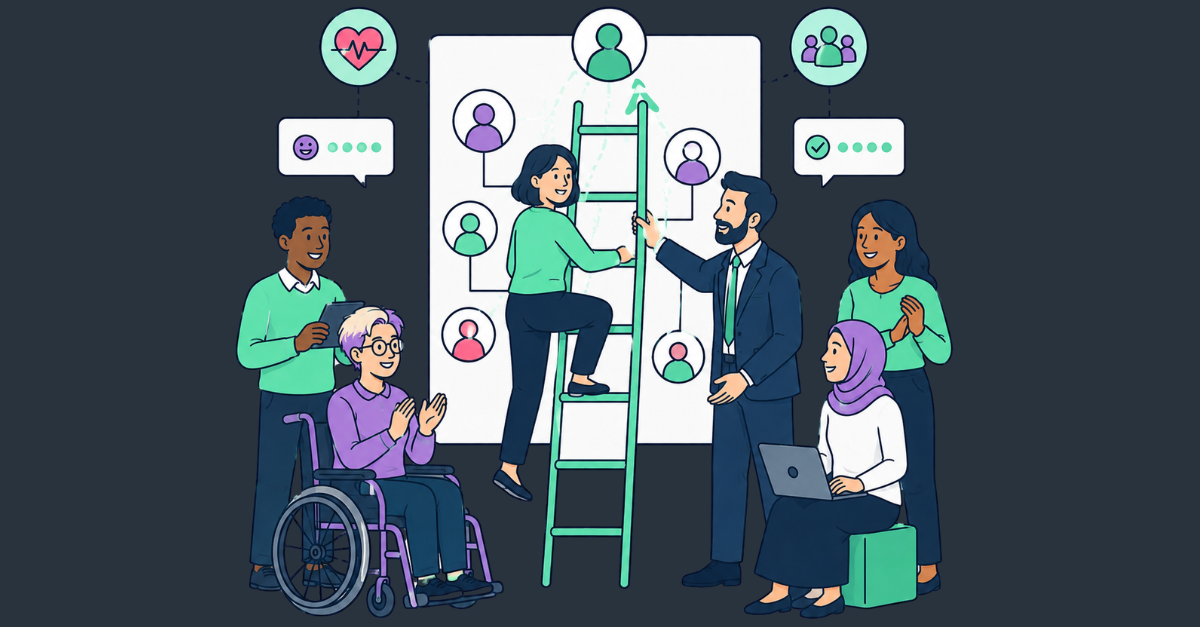
Technology careers are rarely one straight ladder. Good pathways show how contribution can grow through specialist as well as management routes.
A pathway should explain the scope, capabilities and behaviours associated with each level. It should include meaningful examples while leaving room for different working styles and strengths. It should also connect to a fair process for development, pay and promotion.
Avoid frameworks that are so generic they could apply to any company, but do not turn them into a standard checklist. The goal is to make judgements about contribution and readiness more consistent and explainable.
Develop managers before they are overwhelmed
Many first-time managers enter the role because they were excellent individual contributors. The capabilities that made them successful are valuable, but management adds a different set of responsibilities.
New managers need to learn how to set expectations, delegate, coach, give feedback, manage performance and make fair decisions. They also need support with the shift from doing the work themselves to helping others do it well.
Waiting until a manager is struggling can make development feel punitive. Offer preparation before the promotion where possible, then continue support through the first year. Combine useful training with coaching, peer learning and real situations from the job.
Experienced leaders need development too. As a business scales, leadership becomes less about direct expertise and more about direction, alignment, communication and judgement. The aim is not to create one approved personality; quiet, reflective and highly relational leaders can all be effective.
Use coaching, mentoring and sponsorship deliberately
These terms are often grouped, but they solve different problems.
Coaching helps someone think, decide and act with greater clarity. It is particularly useful during transition, increased responsibility or a complex challenge.
Mentoring brings perspective from someone with relevant experience. A mentor can share lessons, help a person navigate unfamiliar situations and widen their view of what is possible.
Sponsorship is more active. A sponsor uses their influence to make someone’s capability visible and open access to opportunities. This can be particularly important for people whose work is strong but who are less connected to informal power networks.
Choose the approach based on the need, set a clear purpose and check whether the support is producing a useful change.
Make access to development fair
Development opportunity is one of the places where workplace representation can either strengthen or quietly narrow.
The principles in our guide to building an inclusive hiring strategy should continue after appointment: make criteria visible, widen access, remove unnecessary barriers and review who progresses at each stage.
If the best projects, mentors and courses are allocated through informal relationships, people with greater proximity to leaders are more likely to benefit. Confidence can be mistaken for readiness while capable people who are less likely to self-promote are overlooked.
Create transparent routes into development. Publish the opportunities available and the criteria used. Invite interest rather than waiting for a tap on the shoulder. Review who is nominated, who participates, who completes and whose learning leads to progression.
Make the format accessible, too. Programmes held after hours may exclude carers, while long classroom sessions may create barriers that blended learning could reduce. People may need protected time, reasonable adjustments or different ways to practise and demonstrate capability.
Blend learning with real work
Training can create energy in the room and still disappear by Monday morning. The difference is usually what happens around it.
Adults develop capability by learning, applying, receiving feedback and trying again. Build that cycle into the programme. After a manager workshop on feedback, ask participants to plan and hold a real conversation, reflect on the outcome and discuss it with a coach or peer group. After technical training, create a project in which the new skill can be used safely and meaningfully.
A blended development programme might include:
- concise workshops or e-learning for shared knowledge;
- coaching for individual goals and challenges;
- mentoring for experience and perspective;
- stretch assignments with appropriate support;
- follow-up sessions focused on application.
Bespoke does not have to mean complicated. It means the examples, language and practice reflect the organisation’s roles, culture and real work. That relevance makes learning easier to transfer.
Build an internal talent pipeline without making promises you cannot keep
Succession planning is sometimes treated as a confidential list of names. A healthier approach looks at the capabilities required in critical roles and creates more than one route for people to become ready.
Map business-critical positions, the risk if they became vacant and the future requirements of the role. Identify possible successors carefully, but do not label people permanently as high or low potential. Performance, aspiration and circumstances change.
Use succession planning to prompt action:
- What experience would help this person prepare?
- Which responsibility can be delegated now?
- Does the business have more than one possible successor?
- Where will external hiring still be necessary?
Be honest with employees. Development is valuable even when it does not guarantee a particular promotion; false certainty damages trust.
Internal development and external recruitment should support each other. Build what makes sense to build, hire what the organisation genuinely needs and use contractors or interim leaders when specialist capability or speed is required. Workforce planning is stronger when those choices are made deliberately rather than reactively.
When external hiring is the right route, our guide to how to hire the right candidate first time provides a practical framework for defining the need, writing the role and making a structured decision.
Measure whether development changes anything
Attendance is easy to count, but it is not the same as impact.
Start with the performance or capability gap the development was designed to address. Then decide what evidence would show progress. Useful measures could include:
- confidence before and after a programme;
- manager or peer observation of changed behaviour;
- application of skills in real work;
- internal mobility and promotion;
- participation and progression across employee groups; and
- feedback on the relevance and accessibility of the learning.
Some outcomes take time. A workshop will not transform leadership culture, so agree short-term indicators and review the longer-term effect as people take on new challenges.
Development is how growth becomes sustainable
Technology will keep changing. Roles will evolve, new specialisms will emerge, and leaders will face situations they have not seen before. A future-ready team is not one that already knows everything. It can learn, adapt and make good decisions together.
That takes structure. Career pathways, competency frameworks, a clear view of future capability, and human support through coaching, mentoring and honest feedback. Boost Talent brings those elements together for start-ups, scale-ups and enterprise technology organisations in Leeds, across the UK and internationally.
If you want to create confident leaders, capable teams and a fairer internal talent pipeline, we would love to start with a conversation about where your people and your business are going next.
Frequently asked questions about developing talent
How do you develop talent in a technology company?
Start with future business needs and current capability gaps. Create clear career pathways, support managers, combine training with coaching and real work, and give employees fair access to opportunities. Measure whether learning is applied and whether internal mobility improves.
What should leadership development for tech teams include?
It should include direction-setting, communication, delegation, coaching, feedback, performance, inclusion, decision-making and leading through change. The content should reflect the organisation’s growth stage and the real responsibilities of its managers and leaders.
How can we make employee development more inclusive?
Publish opportunities and selection criteria, review participation and outcomes, offer accessible formats and protected time, and avoid relying on informal nominations alone. Check whether people from underrepresented groups receive equal access to mentors, stretch work, sponsorship and progression.
At Boost Talent, we help businesses attract, assess and secure exceptional talent through tailored recruitment strategies.